
Vascular Ultrasound
At Advance, we offer advanced ultrasound scanning services tha
At Advance Diagnostics & Imaging, we provide advanced vascular ultrasound services to evaluate the body's arteries and veins and assess blood flow in real time. Using ultrasound and Doppler technology, our vascular imaging studies can help identify blood clots, narrowed or blocked blood vessels, abnormal blood flow, and other vascular conditions.
Vascular ultrasound is a safe, non-invasive, painless, and radiation-free imaging procedure. It provides valuable information about blood vessels and circulation, helping physicians make informed decisions about diagnosis, treatment, and ongoing care.
t provide clear, real-time images of internal organs and tissues. Ultrasound is a safe, painless, and radiation-free imaging method, making it suitable for all age groups, including pregnant women.
Scan Procedure
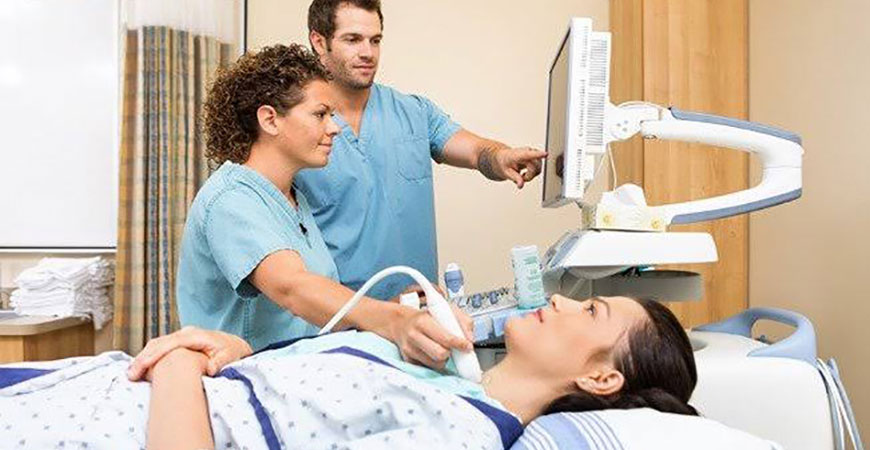
Vascular ultrasound uses high-frequency sound waves to create real-time images of blood vessels. A small handheld device called a transducer is gently moved over the skin after applying a water-based ultrasound gel.
Doppler technology is commonly used during vascular ultrasound to evaluate the direction and speed of blood flow through arteries and veins. It can help identify areas where blood flow is reduced, blocked, or abnormal.
During the examination, the sonographer may ask you to change positions or apply gentle pressure to obtain clear images and accurate blood-flow measurements. The images are displayed on a monitor in real time for evaluation.
Vascular Ultrasound Services
- Carotid Ultrasound
- Venous Doppler Ultrasound
- Arterial Doppler Ultrasound
- Lower & Upper Extremity Vascular Ultrasound
- Varicose Vein Evaluation
- DVT & Vascular Access Evaluation
Things to consider before getting an Ultrasound Scan:
Most vascular ultrasound examinations require little or no special preparation. Wear loose, comfortable clothing that provides easy access to the area being examined, and follow any specific instructions provided by your physician or our imaging team. Depending on the type of examination, you may be asked to avoid eating or drinking for a certain period before the scan. During the procedure, you will generally lie comfortably on an examination table while the sonographer applies ultrasound gel and gently moves the transducer over the area being examined. The examination is typically painless, involves no radiation, and you can usually return to your normal activities immediately afterward.